Watch the companion video: The One Nighttime Myth That's Keeping You From Losing Belly Fat on YouTube
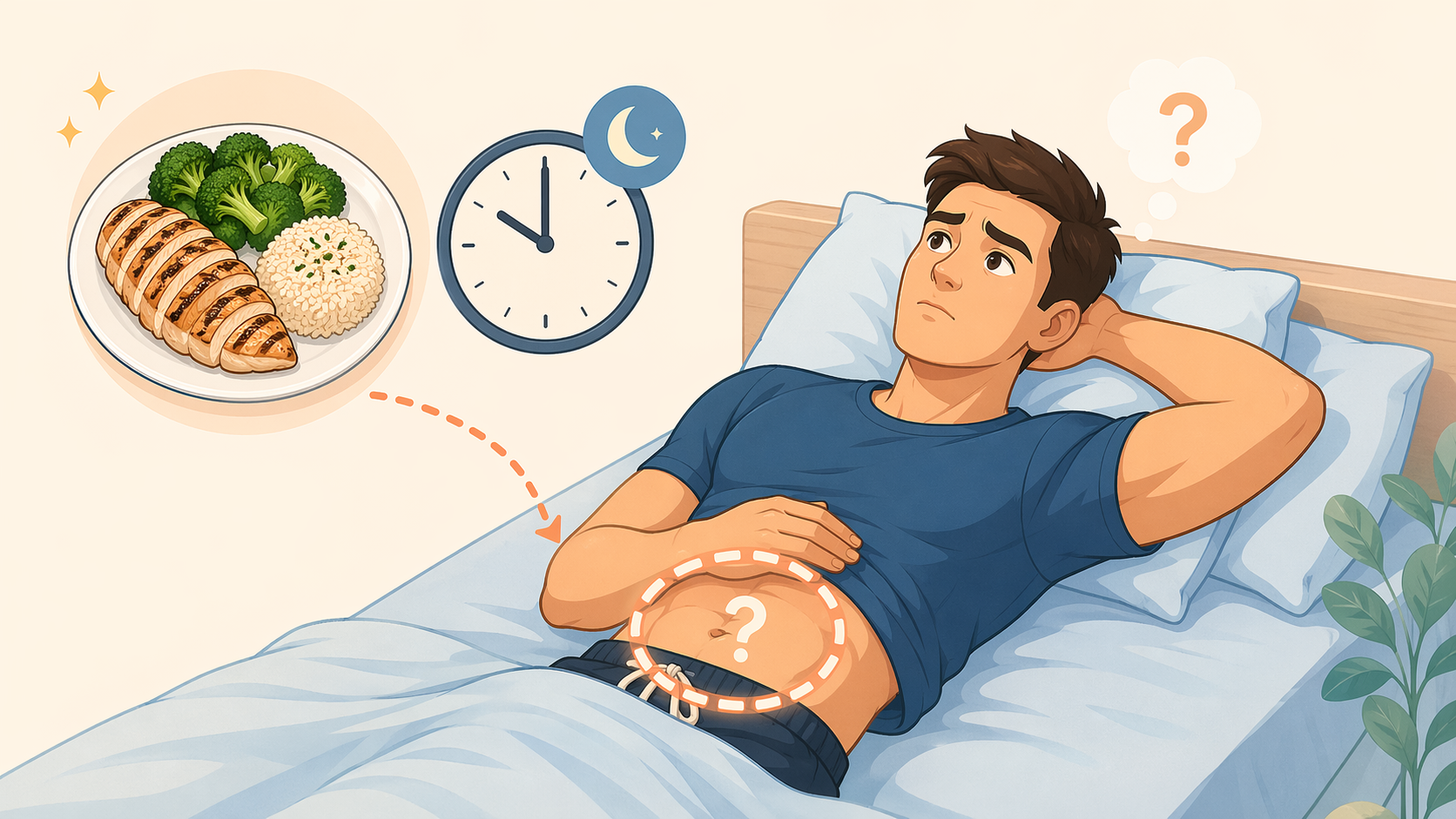
The short answer: no. Eating at night does not automatically become belly fat because it was eaten at night.
What matters more is your total calorie intake, what you eat at that hour, how large the meal is, and whether it hurts your sleep. That's where late-night eating starts causing real problems.
If you keep hearing "never eat after 8 PM," here's what that rule gets wrong.
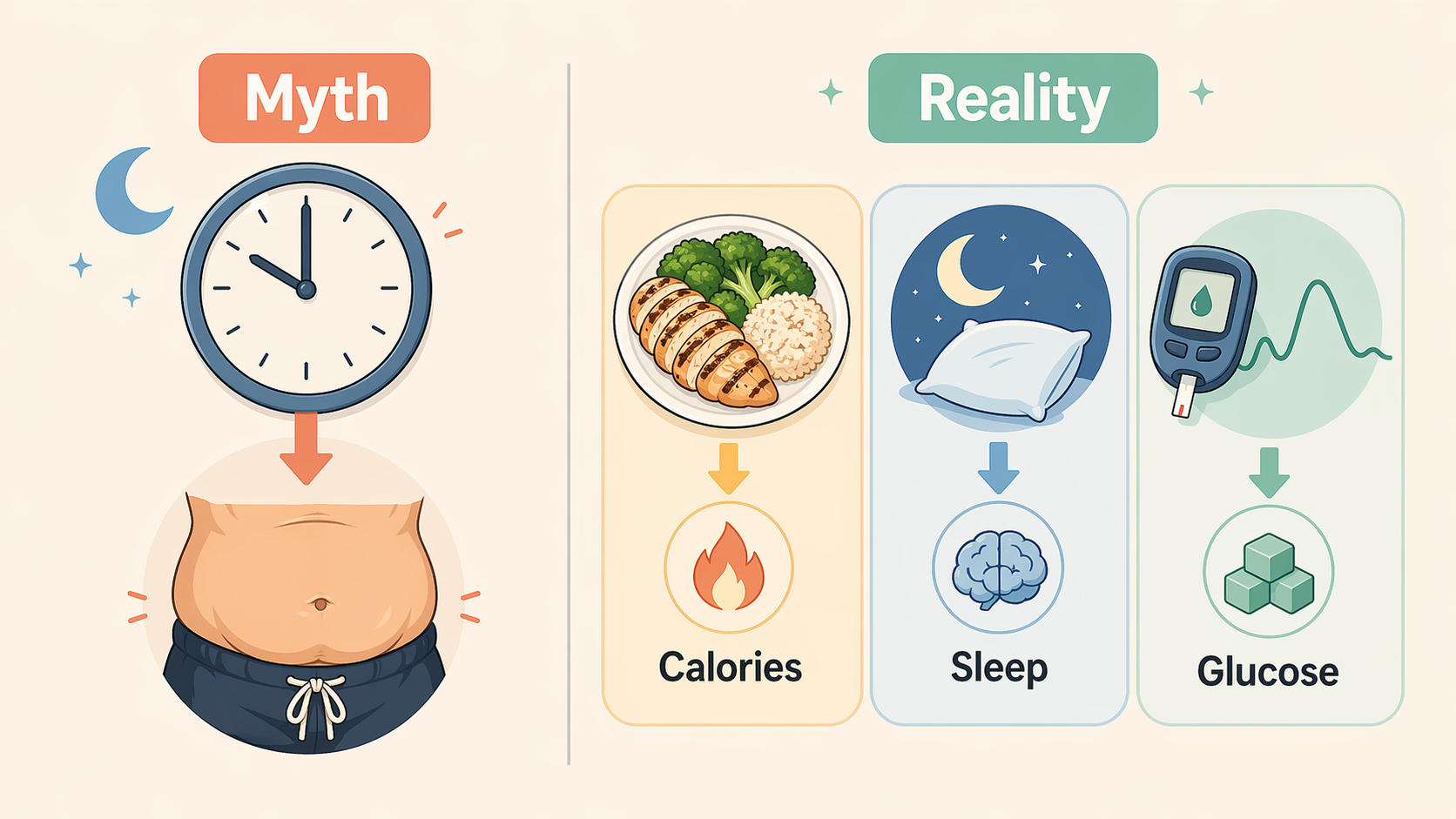
The Myth: After 8 PM Your Metabolism Shuts Down
This is the version most people absorb:
- Eat late
- Your metabolism slows down
- The food "just sits there"
- It goes straight to your stomach
That story sounds clean, but it is not how your body works.
Your metabolism does not shut off when you sleep. All night long, your body is still using energy to breathe, regulate temperature, keep your heart beating, and repair tissue.
A calorie eaten at 10 PM still has the same energy value as a calorie eaten at 10 AM. Your body cares more about the total load across the day than the timestamp on a snack.
Why the Myth Feels True
The reason this myth survives is simple: late-night eating often does show up next to worse fat-loss outcomes in real life.
But the hour itself is usually not the whole problem. The real problem is everything that starts clustering around that hour:
- Structure drops
- Decision fatigue goes up
- Screen-snacking gets easier
- Food choices get worse
- Meal size gets harder to control
Night is where chips, ice cream, delivery, leftovers, and random grazing pile up. Those foods are usually easy to overeat, low in protein, and easy to underestimate.
So people notice the pattern correctly, then explain it incorrectly.
What Actually Matters More Than the Clock
If you're trying to lose belly fat, these factors matter more than "never eat after dark."
1. Total Calories
If your daily calories are controlled, food eaten at night does not magically become body fat because it was eaten late.
If your calories are too high, avoiding food after 8 PM won't save you if you simply move the same excess calories earlier in the day.
The real lever is still the boring one: a calorie deficit sustained long enough to lower body fat.
2. Meal Size and Food Choice
A small planned snack is not the same as a huge meal before bed.
Late eating becomes a problem when it turns into:
- a large heavy meal
- high-calorie snack foods
- low-protein grazing
- "I deserve this" eating after a stressful day
The issue there is not the clock alone. It is the behavior chain around the clock.
3. Sleep Quality
This is the part most people miss.
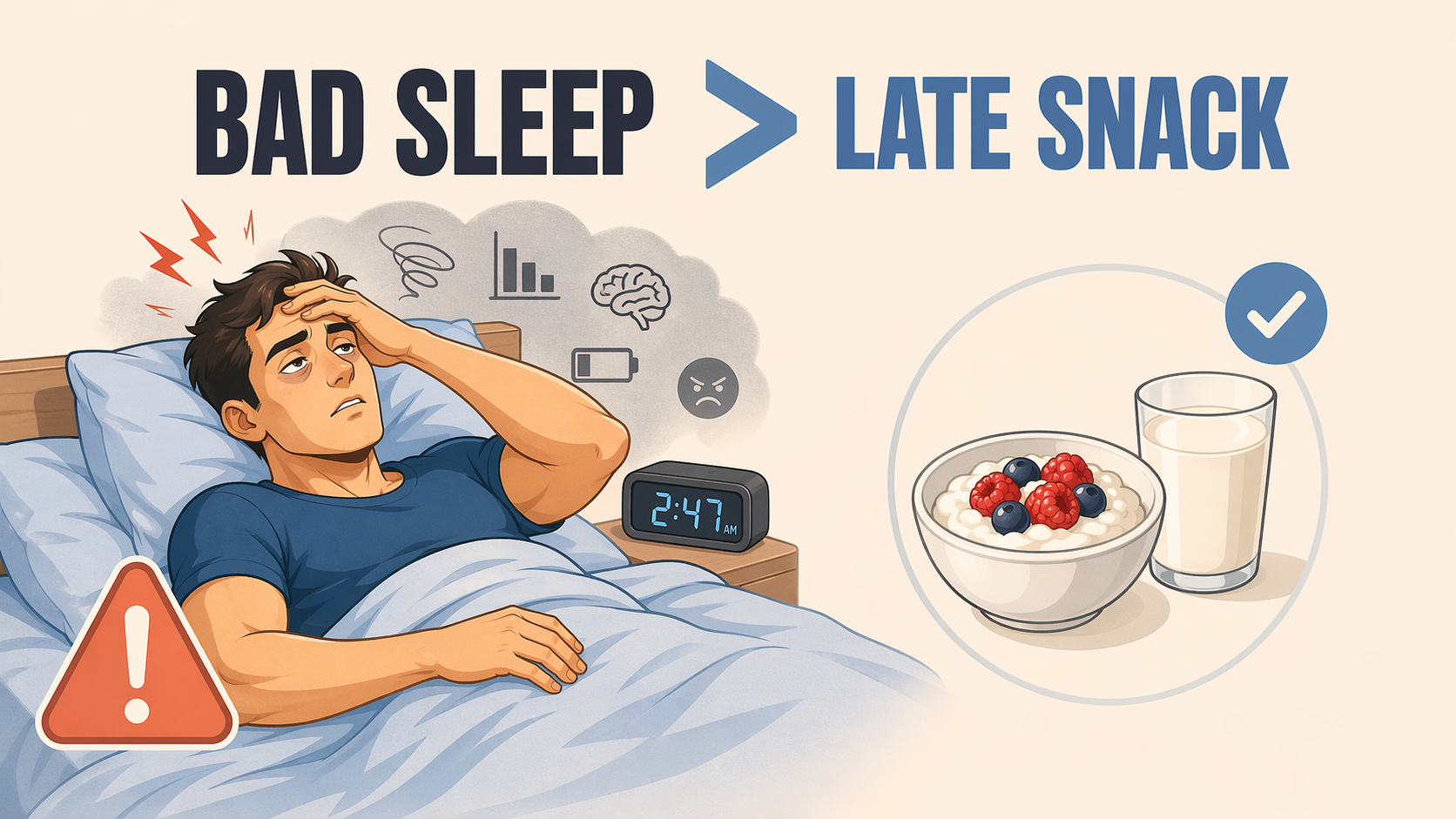
Poor sleep is often worse for belly-fat loss than a small snack before bed. When sleep quality drops, appetite regulation usually gets worse the next day. Hunger rises, cravings rise, and sticking to your plan gets harder.
That is why people sometimes blame one nighttime snack when the bigger driver was actually a bad night of sleep followed by worse eating the next day.
4. Glucose Response and Digestion
For many people, a big late meal sits poorly. Sleep can feel lighter, digestion can feel worse, and glucose may stay elevated into sleep longer than ideal.
That does not mean "any food at night is bad." It means a large heavy meal right before bed is often a bad trade.
Why Poor Sleep Can Lead to More Belly Fat
When sleep gets cut short consistently, two things tend to happen:
- Cortisol rises: chronically elevated stress makes abdominal fat storage easier
- Ghrelin rises: hunger becomes harder to control the next day
Now you are not just tired. You are tired and hungrier.
That creates the exact pattern people blame on night eating:
- more cravings
- more mindless calories
- weaker control the next day
- slower fat-loss progress
So yes, the late-night meal can be part of the issue. But often the bigger damage comes from what that meal does to sleep, and what poor sleep does to the following day.
The Real Rule for Eating at Night
A better rule is this:
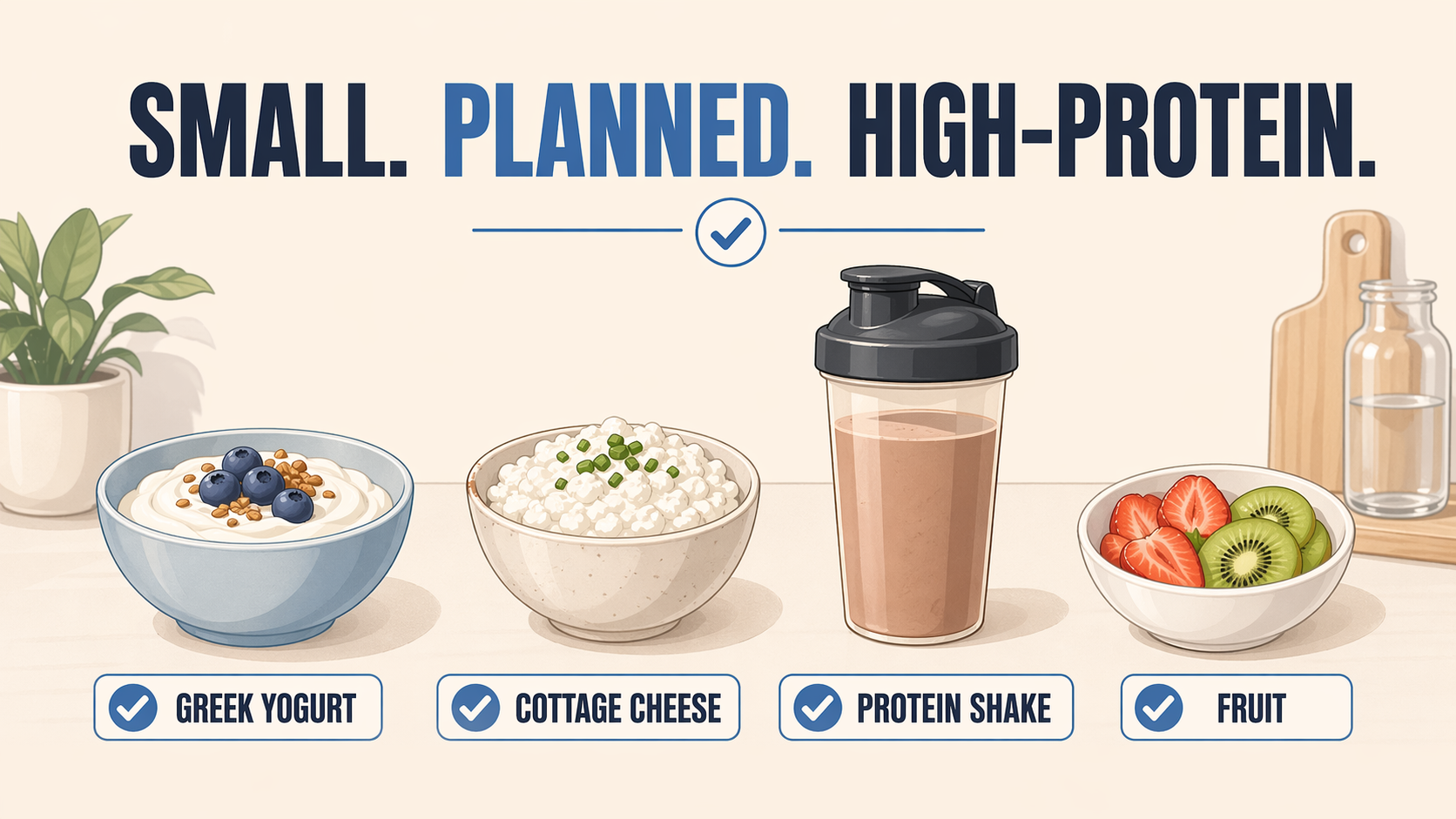
If you're hungry at night, eat deliberately, keep it small, and make sure it still fits your daily calories and doesn't wreck your sleep.
That is a very different rule from "never eat after 8 PM."
Good late-night options are usually:
- Greek yogurt
- cottage cheese
- a protein shake
- fruit
- another small high-protein or fiber-heavy snack
What tends to go badly is:
- a giant dinner right before bed
- dessert plus random snacks on top
- eating while distracted
- eating because the day got stressful, not because you're actually hungry
What to Do Instead of Fearing the Clock
If late-night eating keeps derailing your fat loss, use this checklist:
Leave Some Space Before Bed
You do not need a strict curfew, but many people do better when dinner is not jammed right against sleep.
Take a Short Walk After Dinner
A short walk can help with routine, digestion, and next-day glucose control.
Keep Bedtime Consistent
Better sleep usually means better hunger control, better food choices, and better fat-loss adherence.
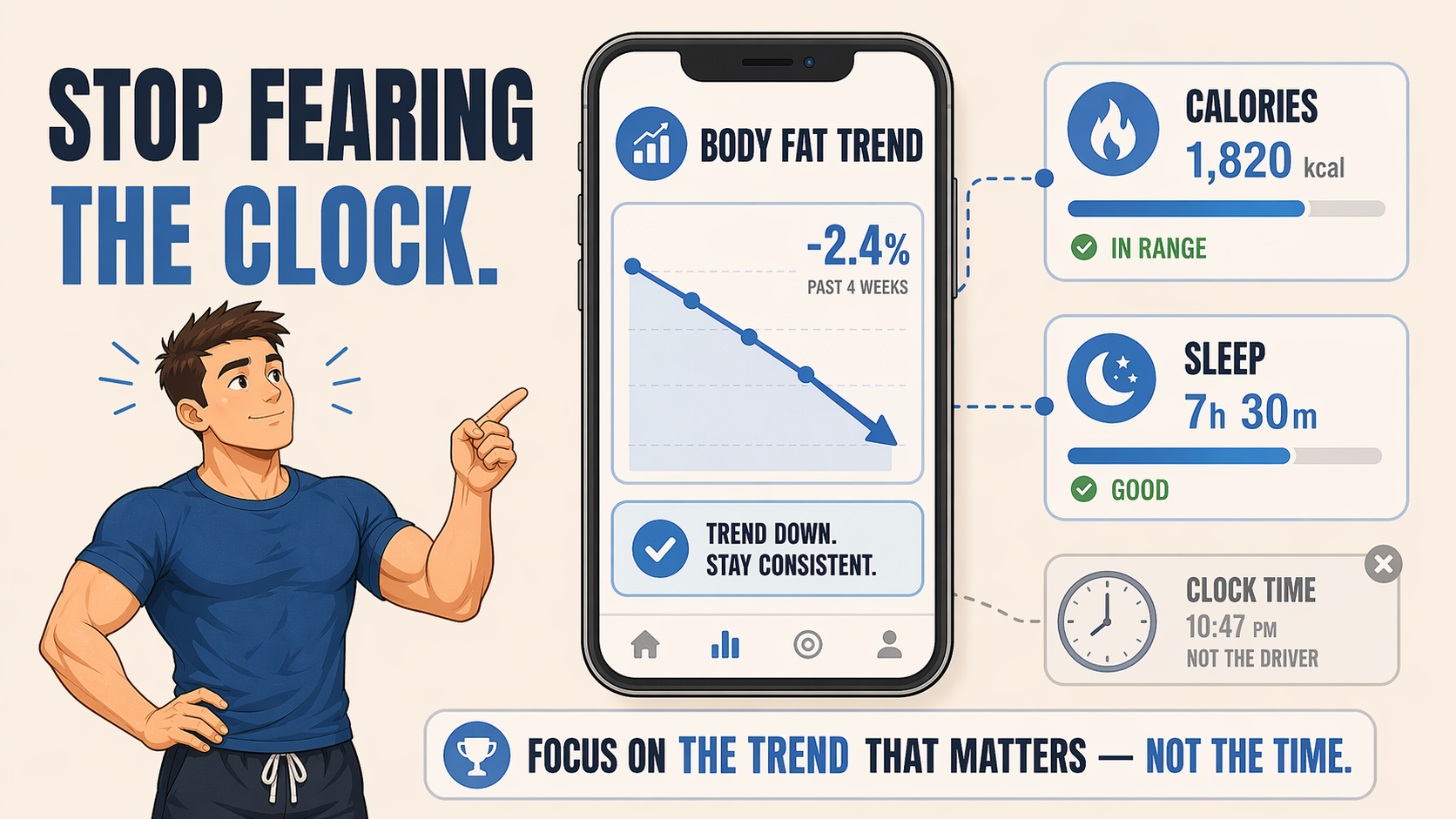
Track the Right Metrics
Do not judge your progress from one mirror check after one late meal.
Track:
- waist measurement
- body fat trend
- average calorie intake
- sleep quality
That gives you the real picture.
If you want context for those numbers, see our Body Fat Percentage Chart and What Is Body Composition?.
Frequently Asked Questions
Is it bad to eat after 8 PM?
Not automatically. Eating after 8 PM is only a problem if it pushes your daily calories too high, disrupts your sleep, or turns into a large unplanned meal. The hour itself is not magic.
Does eating before bed cause belly fat?
Not by itself. Belly fat comes from sustained energy surplus over time. A pre-bed snack can fit into fat loss just fine if your total calories are controlled and the snack does not hurt sleep.
What should I eat if I'm hungry before bed?
A small protein-rich or fiber-heavy snack is usually the best move: Greek yogurt, cottage cheese, fruit, or a protein shake. Keep it deliberate and moderate.
Is a huge late-night meal worse than a small snack?
Yes. A large meal right before bed is more likely to affect digestion, glucose response, and sleep quality. That is very different from a small planned snack.
Should I stop eating 2 to 3 hours before bed?
That can help some people, especially if they notice worse sleep after late meals. But it is a useful guideline, not a universal law. The goal is better sleep and better calorie control, not obeying a clock for its own sake.
The Bottom Line
Eating late at night does not automatically cause belly fat. The clock is not the main driver.
The real drivers are total calories, food choice, meal size, sleep quality, and what your nighttime habits do to the next day. If you're hungry at night, the best move is not panic. It is a small deliberate snack, a little space before bed when possible, and protecting your sleep.
If you want to know whether your plan is actually working, track the trend instead of guessing from one meal. Buff Meter helps you track body fat over time so you can see whether your routine is getting you leaner or just making you anxious.